



Why Won’t My Doctor Help With the Medicare GLP-1 Bridge Program?


Medicare GLP-1 Bridge
-
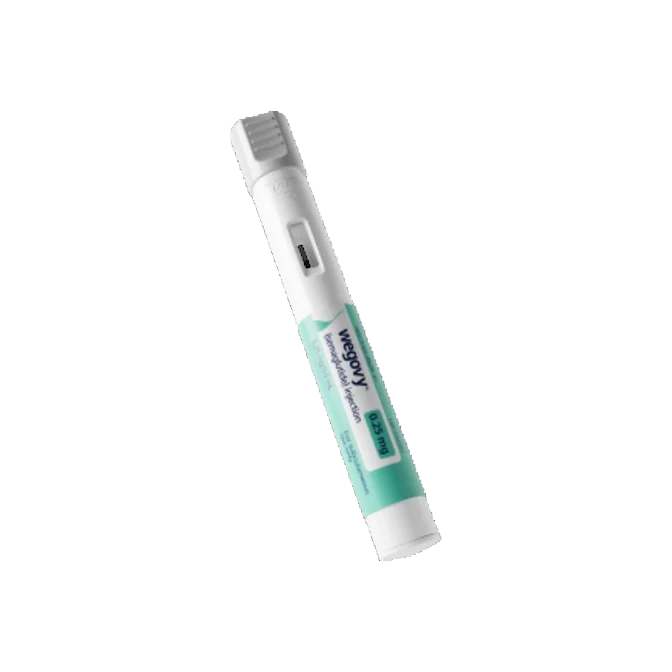 Wegovy
 -
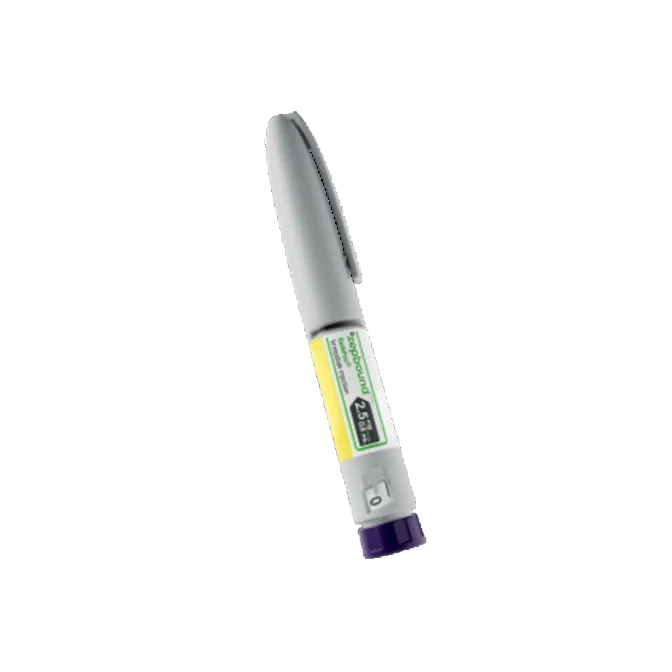 Zepbound KwikPen
 -
 Foundayo
Wegovy, Zepbound KwikPen and Foundayo are listed by CMS for eligible Bridge use.
On this page
If your doctor’s office can’t or won’t help with the Medicare GLP-1 Bridge Program, it’s important to understand why. Sometimes the reason is a medical concern, eligibility issue, or office policy. This guide will help you identify the cause, know which questions to ask, and decide when it may be time to seek care elsewhere. You’ll also learn about the steps and timelines involved in the Bridge Program process, so you can more confidently navigate next steps.
Find out why the office won’t help
Ask directly rather than guessing. The office’s answer may involve one of these issues, and each leads to a different conversation. The Bridge requires prior authorization (PA), a review to confirm that a prescription meets the program’s coverage rules. The prescriber is responsible for submitting the clinical information.
Clinical concern
The prescriber must use clinical judgment and attest that the information submitted is accurate and complete. That includes whether a GLP-1 for weight management is appropriate for you, alongside ongoing nutrition and physical activity support.
What to ask:
“Is there a medical reason you would not prescribe this for me? Can you explain it and what alternatives, if any, are appropriate?”
Eligibility uncertainty
The Bridge Program requires an eligible Part D plan type, age 18 or older, a weight-management use, and clinical criteria assessed when GLP-1 therapy was started — not only how things look today. Some diagnoses, including type 2 diabetes, moderate-to-severe obstructive sleep apnea and a specific form of liver disease called MASH, require review for regular Part D instead of the Bridge. The clinical questions below explain these distinctions.
What to ask:
“Which eligibility or coverage-route question is holding this up — my plan type, the intended use, or a specific diagnosis?”
Practice capacity or process
The office may be unfamiliar with this newer CMS program and may not have a workflow to coordinate the prescription, pharmacy claim, and prior authorization steps. Limited staff time may make the added paperwork difficult to manage, or the office may choose not to take on these requests. It is also possible that the pharmacy’s request did not reach the office.
What to ask:
“Does someone here handle Bridge Program prior authorization requests? Did you receive a request from my pharmacy, and can you suggest another qualified provider if you cannot submit it?”
If you already have a prescription, find where the request stopped
The Bridge Program has a specific order. Use this sequence to locate your request:
- The pharmacy submits the first Bridge Program claim. The pharmacy must submit the initial claim to the Medicare GLP-1 Bridge Program before the prescriber submits the prior authorization. If the prescriber submits the PA before the pharmacy claim establishes the patient in the Bridge system, it may result in a “patient not found” error.
- Pharmacy sends the prior authorization request to the prescriber. After the pharmacy submits the Bridge claim and a PA is required, the pharmacy sends the PA request to the prescriber electronically or by fax, typically within 24–72 hours.
- Prescriber submits the prior authorization. The prescriber completes and submits the PA electronically or by fax.
- Bridge prior authorization decision is issued. The approval or denial is sent to the prescriber via portal or fax and mailed to the patient within 72 hours of PA submission. The 72-hour timeframe refers to when the decision notice is sent, not when the letter or medication will arrive. It is not a promise of approval.
- Pharmacy reruns the claim if approved. If the pharmacy does not receive the approval electronically, it may need to rerun or resubmit the claim. Once the PA is approved, the claim should process and the pharmacy can dispense the medication.
A pharmacy rejection is not the same as a prior authorization denial. A rejection is a message at the counter, for example, that prior authorization is required, there is an eligibility question, or the product as written is not covered. A denial is the decision made after the prescriber’s completed prior authorization is reviewed.
Ask the pharmacy:
“What is the exact wording on the rejection, and did the claim go to the Bridge Program or to my regular Part D plan?”
“Has a prior authorization decision been made, or are we still waiting for the prescriber’s submission?”
Ask the office:
“Did you receive the pharmacy’s prior authorization request, and have you submitted it?”
“If you sent it before the pharmacy ran the first claim, can you check whether it processed?”
A request sent too early can fail because there is no initial claim to match. A “patient not found” error is a processing problem, not a decision that you fail to meet the clinical criteria.
You do not need a Part D denial before trying the Bridge Program. If the claim went the wrong route, the prescriber and pharmacy can check the appropriate route and correct the submission. A brief note indicating the Bridge Program and applicable diagnosis code can help with pharmacy routing, but it is not required to process the claim and does not determine or confirm patient eligibility.
Two timing checks can guide follow-up, without giving a total completion time:
- The pharmacy typically sends the request to the prescriber within 24 to 72 hours of the first claim. If the office has received no request after 72 hours, the prescriber may download the CMS PA form and submit it, as long as the initial pharmacy claim has been run.
- After the prescriber submits the prior authorization, allow time for the 72-hour decision notice, mail delivery, and for the pharmacy to rerun an approved claim.
If the message points to the product, ask the prescriber and pharmacy to verify the exact covered formulation. For example, the Bridge Program covers Zepbound KwikPen but not the Zepbound single-dose vial or pen as written. Wegovy and Foundayo are also included for eligible weight-management use. Do not change or rewrite a medication on your own; the prescriber decides if another formulation is appropriate.
For pharmacy-specific details, the pharmacy can use the CMS instructions for pharmacies. The CMS instructions for providers describe the prescriber steps, timing, and resubmission rules.
Common questions about clinical eligibility
The Medicare GLP-1 Bridge Program has specific clinical requirements. Meeting the basic insurance requirements does not automatically mean you qualify. Your medical provider must review your health history and determine whether you meet the program’s clinical criteria and whether GLP-1 treatment is appropriate for you.
Does my current weight determine whether I qualify?
Not by itself. Clinical criteria are assessed when GLP-1 therapy begins, including when therapy began before Part D enrollment or the July 1, 2026 launch. That means your provider reviews starting body mass index (BMI), a measure based on height and weight, and applicable diagnoses from when you originally started GLP-1 therapy, rather than only your current weight. Current weight alone does not decide eligibility, and BMI alone does not establish full eligibility. Your treatment-start records help your provider assess these requirements.
What if I have type 2 diabetes?
Beneficiaries with type 2 diabetes are ineligible for the Bridge and should use regular Part D for the relevant indication, based on provider review of diagnosis and intended use. Regular Part D coverage is not guaranteed or automatic, and its rules and costs can differ from the Bridge. A condition controlled with treatment is not automatically considered resolved. Your provider uses clinical judgment and accepted diagnostic standards to interpret your records.
What if I have sleep apnea?
Moderate-to-severe obstructive sleep apnea makes a beneficiary ineligible for the Bridge; the relevant coverage route is regular Part D. This rule does not apply to every sleep-apnea diagnosis, and CPAP use alone does not establish severity. Your provider may need your sleep study or documentation from the clinician who diagnosed your sleep apnea to confirm severity under accepted diagnostic standards.
What if I have another medical condition that could affect eligibility?
Some specific conditions affect the coverage route. For example, people with noncirrhotic MASH — a form of fatty liver disease without cirrhosis — with moderate-to-advanced liver scarring (F2-F3 fibrosis) are ineligible for the Bridge. The relevant coverage route is regular Part D. This rule does not apply to all liver disease. Your provider will review your medical history and supporting documentation and use clinical judgment to determine the appropriate route.
Does completing an eligibility questionnaire mean I am approved?
No. An initial eligibility check can help determine whether you may be a candidate, but it does not guarantee clinical eligibility, insurance coverage, a prescription, or prior authorization approval. A licensed medical provider must review your history, the program’s clinical criteria and whether treatment is appropriate.
If there is a denial or no definitive update, ask for the next action
Get specifics in writing if you can: the exact decision or rejection message, the date the prior authorization was submitted, what information is missing, and who will follow up.
If the prior authorization was incomplete or incorrect, the prescriber may resubmit with corrected, updated or additional accurate information. The Bridge Program does not have a formal appeals process, so do not follow regular Part D appeal instructions for a Bridge Program decision.
Follow-up varies by practice. Confirm whether your office will review the denial and resubmit with corrected or additional information when appropriate. Resubmission does not guarantee approval.
Ask the office:
“Will your office review the reason for the denial and, if information is missing or incorrect, submit an updated request? Who should I contact for follow-up?”
If you already take a GLP-1, bring records from when you started therapy. The Bridge Program assesses clinical criteria at therapy initiation, so starting weight and health history matter even after weight loss. Body mass index (BMI) is part of that picture, but BMI alone does not establish eligibility. Ask your current or prior clinician for treatment start dates, starting measurements, medication history, and related diagnoses, and let the evaluating provider tell you what else is needed.
If the status or eligibility question remains unclear, you can call 1-800-MEDICARE (1-800-633-4227) to ask about eligibility or prior authorization status, as described on Medicare’s weight-loss drugs page. Medicare can help check status but cannot replace the clinician’s evaluation.
Before you end a call or visit, ask for a named contact and a follow-up plan: who will look for missing information, when you should call back, and what message to relay between the pharmacy and office.
When to consider another provider
If the practice cannot manage Bridge Program requests or communication remains unresolved after you ask for the reason and status, another qualified provider can evaluate whether care through the Bridge is appropriate.
A second evaluation does not guarantee approval, a prescription, or continued refills. Be prepared to discuss your current medicines, medical history, starting-treatment records, and the pharmacy or decision message you received.
Before you transfer care or start a new evaluation, ask the new practice:
- Do you handle Medicare GLP-1 Bridge Program requests, including the prior authorization?
- What can you do with a request that is already open or was denied?
- Which records do you require from my prior clinician or me?
- Who follows up if information is missing?
- How do you coordinate ongoing care, and are you licensed to see patients in my state?
- What service fees, copayments, coinsurance, or deductibles may apply to visits and monitoring?
MDWatch as a second option
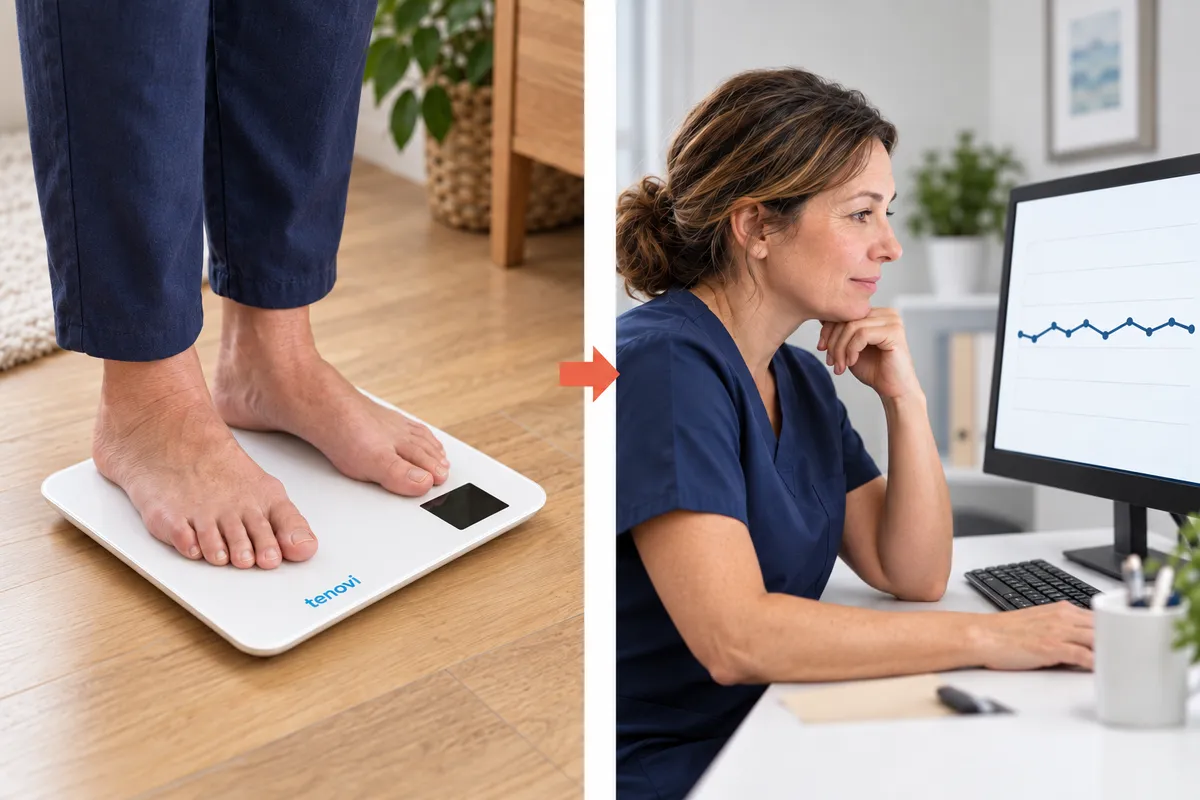
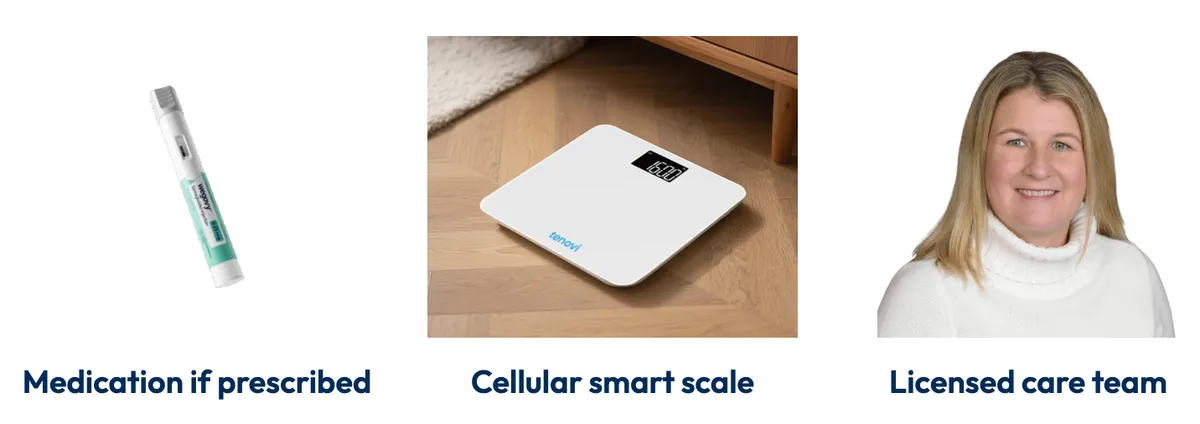
MDWatch provides a video evaluation with a licensed medical provider, prescription and prior authorization support for patients who qualify, and ongoing clinical monitoring with monthly check-ins. Its cellular smart scale sends weight readings automatically to the care team, without Wi-Fi, phone pairing or entering readings in an app.
The $50 Bridge Program amount is the medication copay for an eligible, approved one-month supply (28 or 30 days, depending on the medication). It is not the total cost of MDWatch care. MDWatch notes that service copayments, coinsurance, and deductibles may apply depending on your insurance.
You can check benefits before enrollment to estimate out-of-pocket costs. Ask in advance about service costs, state availability, and how MDWatch would handle an open request.
To see whether MDWatch may be an option, use the eligibility check on the Bridge Program page. That initial check is preliminary only and does not determine final clinical eligibility, coverage, or treatment.
Bridge eligibility and prior authorization guidance checked October 7, 2026. The Bridge Program rules can change; confirm current requirements with your clinician, pharmacy, or Medicare.
MDWatch Medicare GLP-1 Bridge
Find out whether MDWatch may be an option
Explore an evaluation, help with the required authorization and ongoing care. The preliminary check does not guarantee a prescription or coverage. Service costs may apply.
Medicare accepted
Written by
MDWatch Editorial Team
Edited by

Jacquelyn Will
Health writer · MDWatch
Continue reading
All articles

This article is for general educational purposes only and is not medical advice. It should not replace a conversation with a licensed healthcare provider who knows your full medical history. Always talk with your provider before starting, stopping, or changing any treatment.